Advanced Well Control & Hydrostatics
Mastering pressure management for supervisors and engineers across the Permian Basin, Gulf Coast, and global offshore operations.
The Science of Pressure in the Field
From the high-pressure reservoirs of the Delaware Basin to the deepwater challenges of the Gulf of Mexico, advanced well control and hydrostatics form the backbone of drilling safety. This reference covers the technical ground required for personnel moving from Level 2/3 basic certification to Level 4/5 supervisory and engineering roles — if you need the foundational concept itself first, start with the hydrostatic pressure reference page.
In the oil and gas sector, a kick isn't just an operational delay — it's a high-stakes physics problem. Managing hydrostatic pressure effectively prevents formation fluids from entering the wellbore, protecting both the crew and the integrity of the rig equipment.
Core Hydrostatic Foundations
Before moving into complex kill procedures, every driller and engineer must master the governing formula — the primary barrier against blowouts.
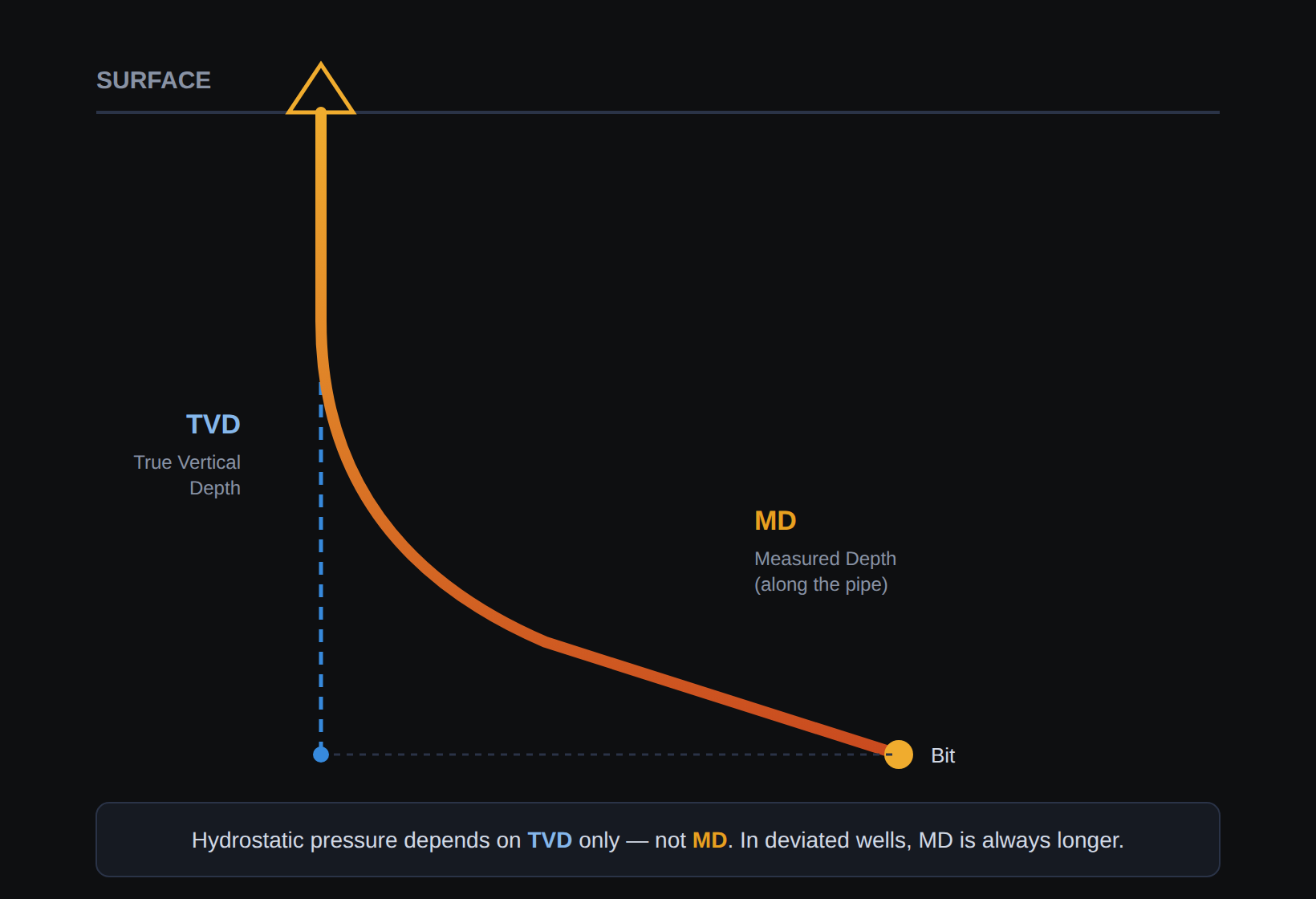
True Vertical Depth (TVD)
Advanced hydrostatics strictly distinguishes Measured Depth (MD) from TVD. In directional and horizontal wells, hydrostatic pressure is generated only by the vertical column of fluid, not the total length of pipe — critical for offshore operators in the Gulf and land-based directional drillers in the Permian.
Pressure Gradients
Standard saltwater gradients sit around 0.465 psi/ft. When formation pressures exceed this — abnormal pressure — hydrostatic management through high-density mud systems becomes necessary. See the mud weight guide for the full breakdown.
Equivalent Circulating Density
ECD accounts for the added pressure exerted by fluid friction during circulation. In narrow mud weight windows, managing ECD is the difference between maintaining well control and fracturing the formation.
Secondary Well Control & Kill Methods
When primary barriers fail and a kick is detected, supervisors choose the appropriate circulation method based on well conditions and equipment limits.
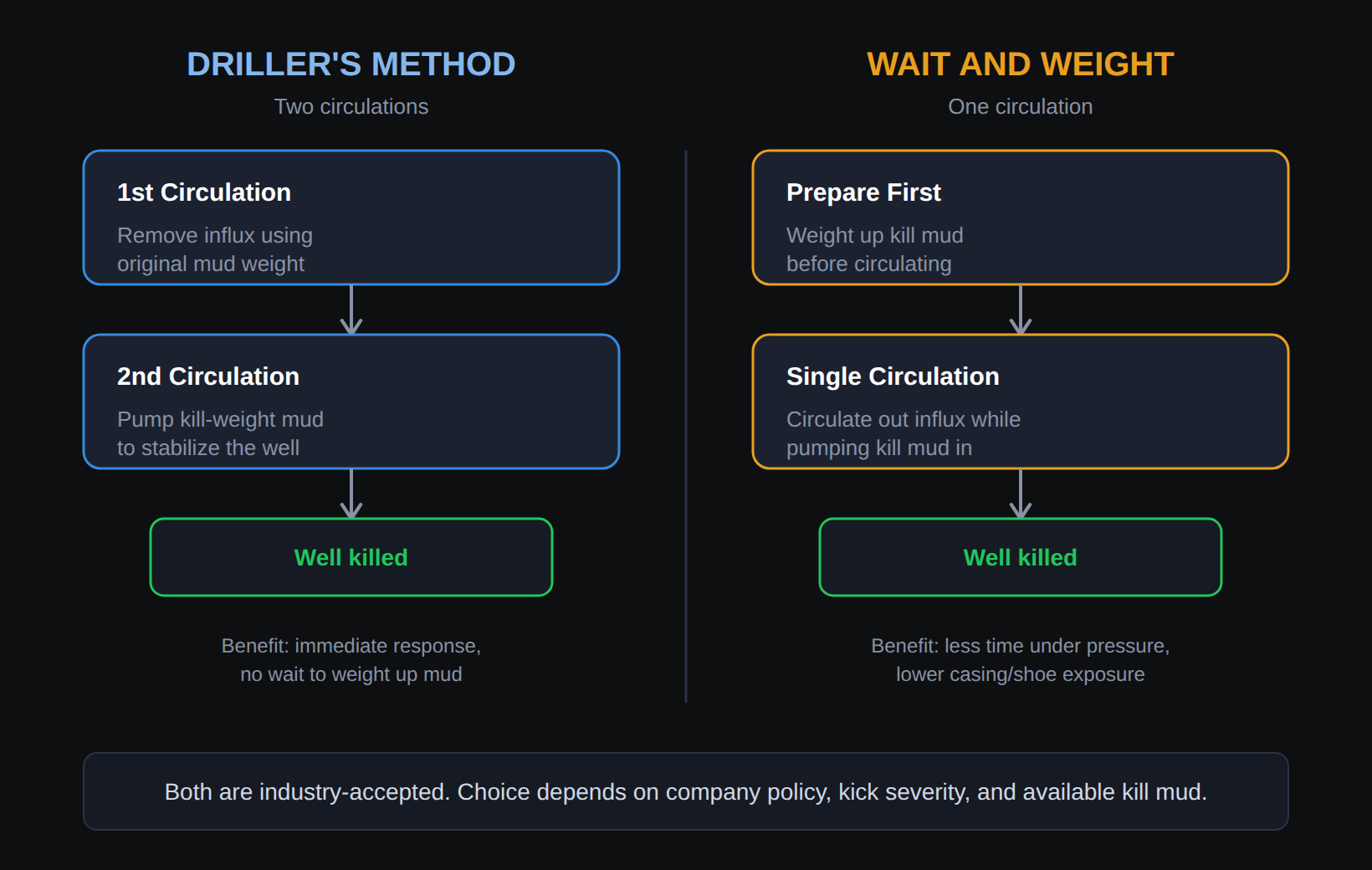
The Driller's Method
Commonly used when the kick is discovered immediately. Involves two complete circulations:
- First circulation: remove the influx using original mud weight
- Second circulation: pump kill mud to stabilize the well
- Benefit: allows immediate response without waiting for kill mud to be weighted up
Wait and Weight Method
Often preferred to minimize pressure on the casing and BOP stack. Requires only one circulation:
- Kill mud is prepared before circulation begins
- Influx is circulated out while kill mud is pumped in
- Benefit: reduces total time the well is under pressure and maintains lower shoe pressure
For automated calculations, use the kill sheet calculator.
Local Operational Context
Different regions present distinct hydrostatic challenges.
- The Permian Basin (TX/NM): narrow windows between pore pressure and fracture gradients in horizontal lateral sections
- The Gulf Coast: hydrostatic pressure management in high-temperature environments and complex salt dome formations
- Offshore Deepwater: subsea well control, including riser margins and the effect of cold ocean temperatures on mud rheology
Equipment Spotlight: The BOP
The blowout preventer is the final line of defense. Understanding the pressure ratings of rams and annular preventers is a core component of advanced well control. See the full BOP components guide.
Frequently Asked Questions
KMW = (SIDPP ÷ (0.052 × TVD)) + Original Mud Weight. See the hydrostatic calculator suite for the full worked calculation.
Common indicators include an increase in pit volume, a flow rate increase while drilling, and a decrease in pump pressure. Full breakdown in five warning signs of a kick.
A non-circulative well control technique used when the drill string is off-bottom or pumps have failed. It relies on allowing gas to expand while bleeding off specific volumes of mud at the surface to keep bottomhole pressure constant.
An advanced drilling process used to precisely control the annular pressure profile throughout the wellbore, allowing operators to drill wells where the margin between pore pressure and fracture gradient is extremely tight.
Explore the full field glossary for oilfield terminology.